When editing a report, select the View menu, and then select PerformanceAnalyzer to display the PerformanceAnalyzer pane. Once selected, performanceanalyzer is displayed in its own pane to the right of the report canvas in either PowerBI Desktop or the PowerBI service.
The PowerBIPerformanceAnalyzer is a feature included in the May 2019 release of Power BI Desktop that simplifies the way you can collect the DAX queries generated by Power BI.
Is your PowerBI report slow to load or respond? In this video, I’ll show you how to use the PerformanceAnalyzer in PowerBI Desktop to find out what’s causing delays. Whether it’s a...
This guide will walk you through, step-by-step, how to use PowerBI's built-in PerformanceAnalyzer to find and fix the exact visuals and queries slowing down your report.
By the end of this tutorial, you’ll know how to use the Power BI Performance Analyzer to pinpoint what’s slowing down your dashboards—whether it’s inefficient DAX measures, heavy visuals, or data model design issues.
In this article, we will walk through what PowerBIPerformanceAnalyzer is, how to enable and use it in Power BI, and how its timings behave in everyday report use.
First, you need to turn on the PerformanceAnalyzer. This will open a panel that lets you track every action happening behind the scenes when you interact with your report. Now, you need to...
Using the PerformanceAnalyzer, you can see and record logs that measure how each of your report elements performs when users interact with them, and which aspects of their performance are most (or least) resource intensive.
Monitor report performance in Power BI Desktop using the Performance Analyzer. Monitoring will help you learn where the bottlenecks are, and how you can improve report performance.
A built-in tool in PowerBI Desktop that helps measure how long each visual and query takes to process. It highlights slow calculations, rendering delays, and areas that need optimization.
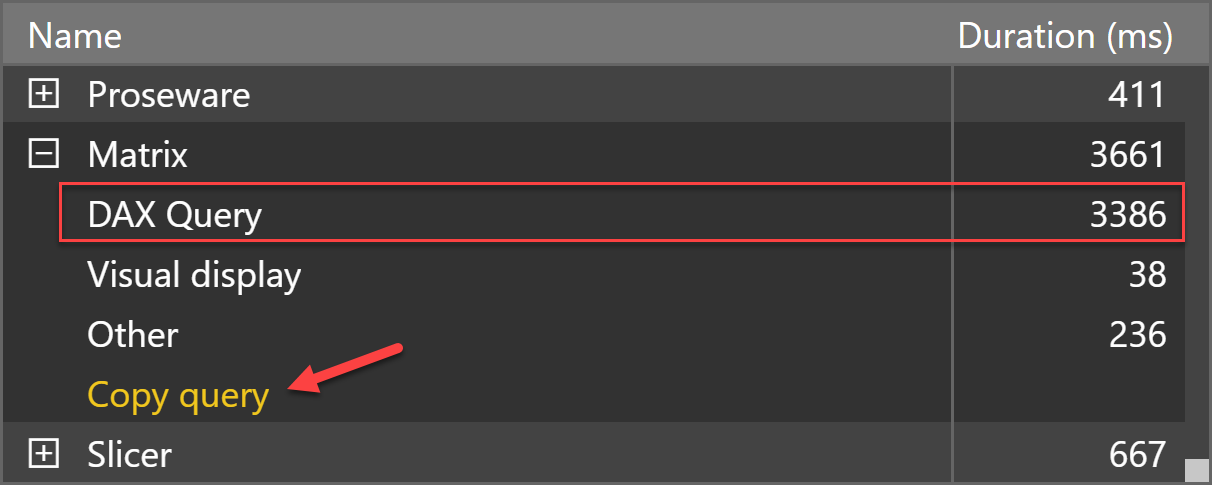 The Power BI Performance Analyzer is a feature included in the May 2019 release of Power BI Desktop that simplifies the way you can collect the DAX queries generated by Power BI.