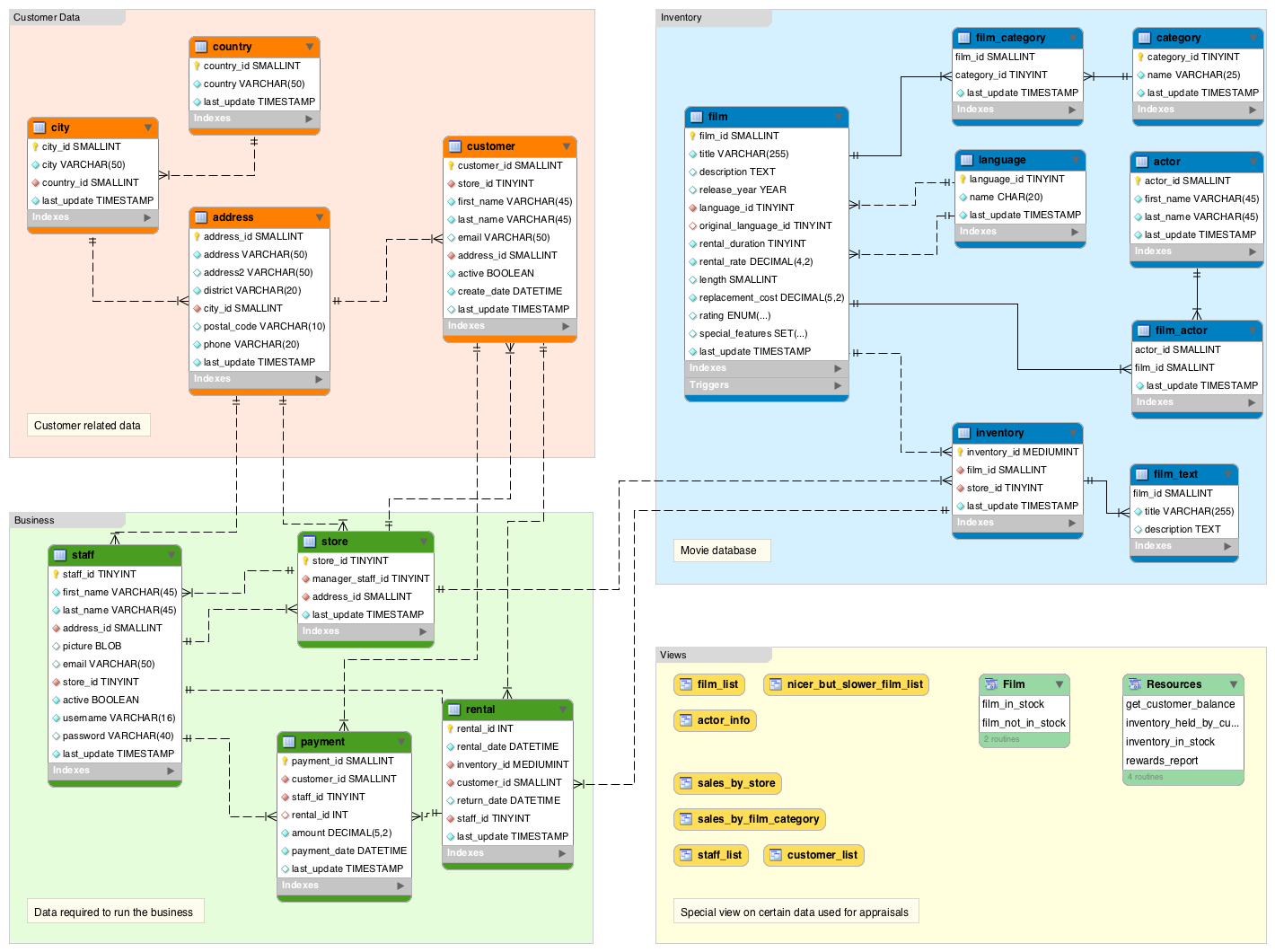
A database schema is the design or structure of a database that defines how data is organized and how different data elements relate to each other. It acts as a blueprint, outlining tables, fields, relationships, and rules that govern the data.
A databaseschema logically describes a part or all of a database by displaying the data structure in tables, fields, and relationships. You can think of it as a blueprint for understanding an organization’s data resources.
What is a database schema? A database schema defines how data is organized within a relational database; this is inclusive of logical constraints such as, table names, fields, data types and the relationships between these entities.
The term "schema" refers to the organization of data as a blueprint of how the database is constructed (divided into database tables in the case of relational databases).
A database schema refers to the overall design of a database, providing information about its structure, what it may include, and the relationships between datasets.
A databaseschema is a comprehensive blueprint that formally defines the complete logical structure and organization of data within a Database Management System (DBMS).
So, what exactly is a database schema? Think of it as a blueprint for a building. Just as a blueprint provides a detailed plan for constructing a house — outlining how many rooms it has, their dimensions, and how they connect — a database schema outlines how data is organized within a database.
The schema defines the structure of a database and outlines the tables and fields, including the relationships between them, and other data elements necessary to accurately access and update information stored within.
In database terms, a schema (pronounced “skee-muh” or “skee-mah”) is the organisation and structure of a database. Both schemas and schemata can be used as plural forms.